

Get baking!
Wheat, cholesterol and statins; why home baking should have a place in your life.
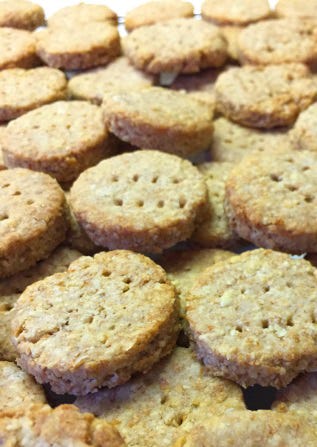
Today another study has come out that helps to allay our fears surrounding statins. For me it is particularly encouraging because about a week ago my GP advised that I ought to start taking them.
Statins help reduce cholesterol and other fats, such as triglycerides, in the bloodstream. And as anyone who’s getting on a bit will know, there comes a time when the GP will recommend them to you. Some studies have even suggested that if everyone say, over 50 were to take statins the incidence of heart attacks and strokes would reduce significantly.
The concern is that any drug has some side effects, and we cannot predict who might be harmed by such a blanket approach. So at present prescribers tend to cherry-pick suitable recipients according to age, weight and gender alongside the blood tests that measure lipid levels. But this new study should encourage a wider use of statins especially among younger people and women - who tend to get forgotten in the race to save the lives of older men - whose incidence of heart attacks is alarming.
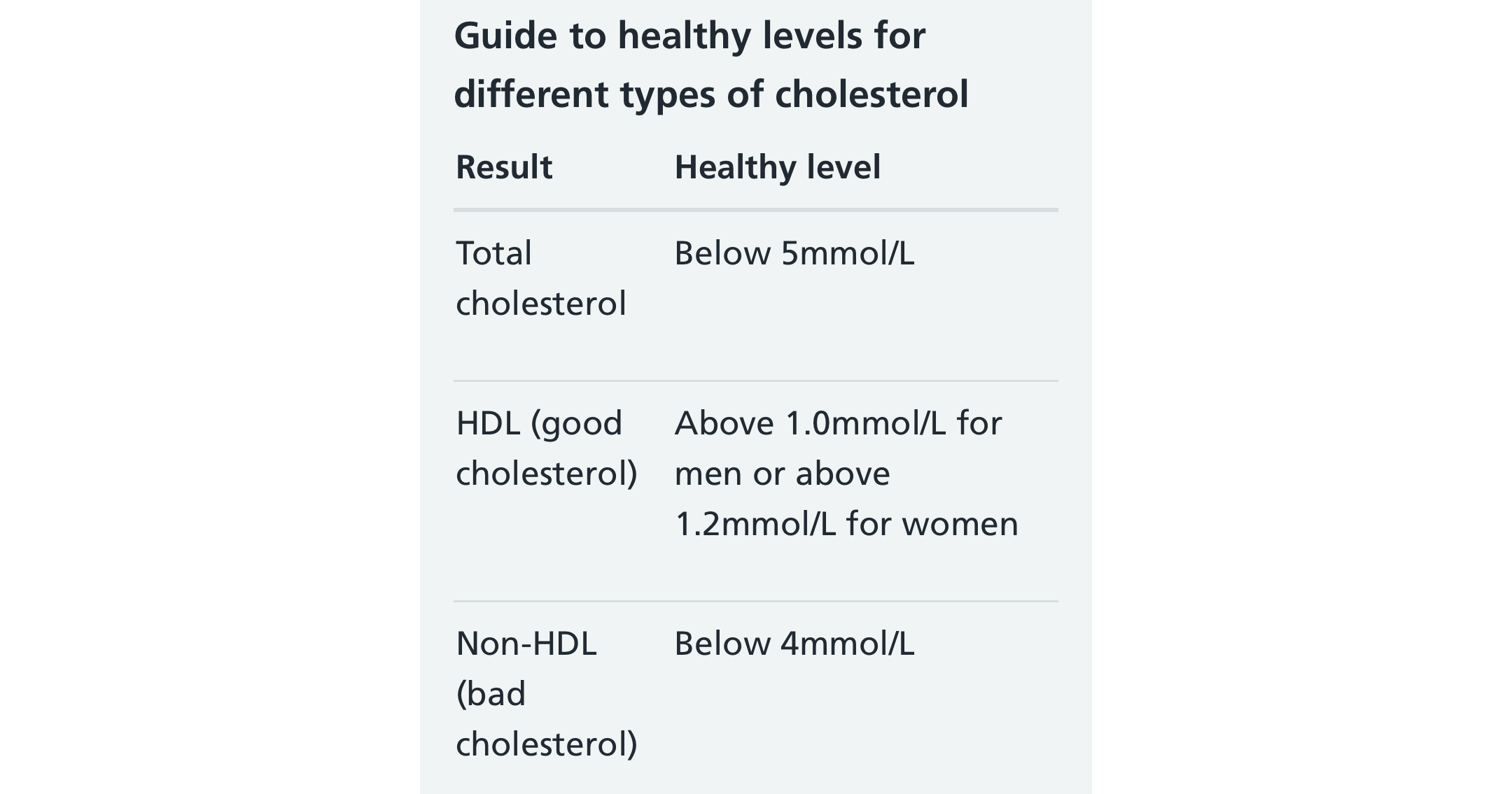
It’s important to recognise that statins are not a wonder drug. At best, even high doses will reduce your total cholesterol level by only about one millimole per litre. So if the GP recommends statins they are also likely to recommend a low-cholesterol diet and more exercise at the same time.
But being diagnosed with a high cholesterol count doesn’t mean you have to forego the delights of good food. It simply means that you ought to consider cooking more yourself, so you can better control the quality and quantity of the ingredients.
Dont think about cutting out whole food groups like dairy or cereals. Instead consider modifying your diet, for optimum flavour and healthiness.
I’d start by excluding bought products such as croissants, cakes and biscuits that are literally saturated with unhealthy fats. Look at the ingredients in this croissant I was given in the train the other day!
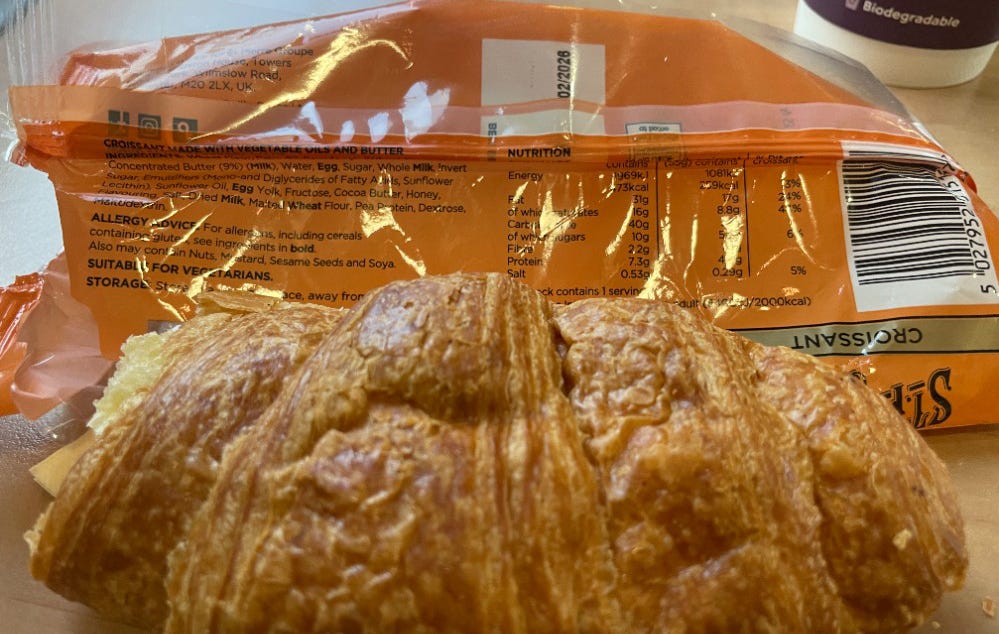
It is difficult to eat out and on the move. So before your next forray onto Great British Rail (though my croissant was actually found on an EMR train) I’d suggest some healthy home baking. And along the way, you’ll get a gentle work out in the kitchen as well.
It is best to stick to home made wholemeal bread, or soda bread. Choose tried and tested old-fashioned recipes like Victoria sponge and avoid anyhting too fancy. The more cream, butter, dried fruit, sugar, salt or olive oil you add to the mix, the higher in fats it will be. (The most important thing is to substitute refined flour for wholemeal. For example, home made digestive biscuits are easy to make and delicious. You’ll never go back to the packeted variety again (filled with ghastly additives and blood curdling sugars). Look at this easy recipe from a 1983 edition of the Cranks Cookbook, which I’ve been using for 40 years.
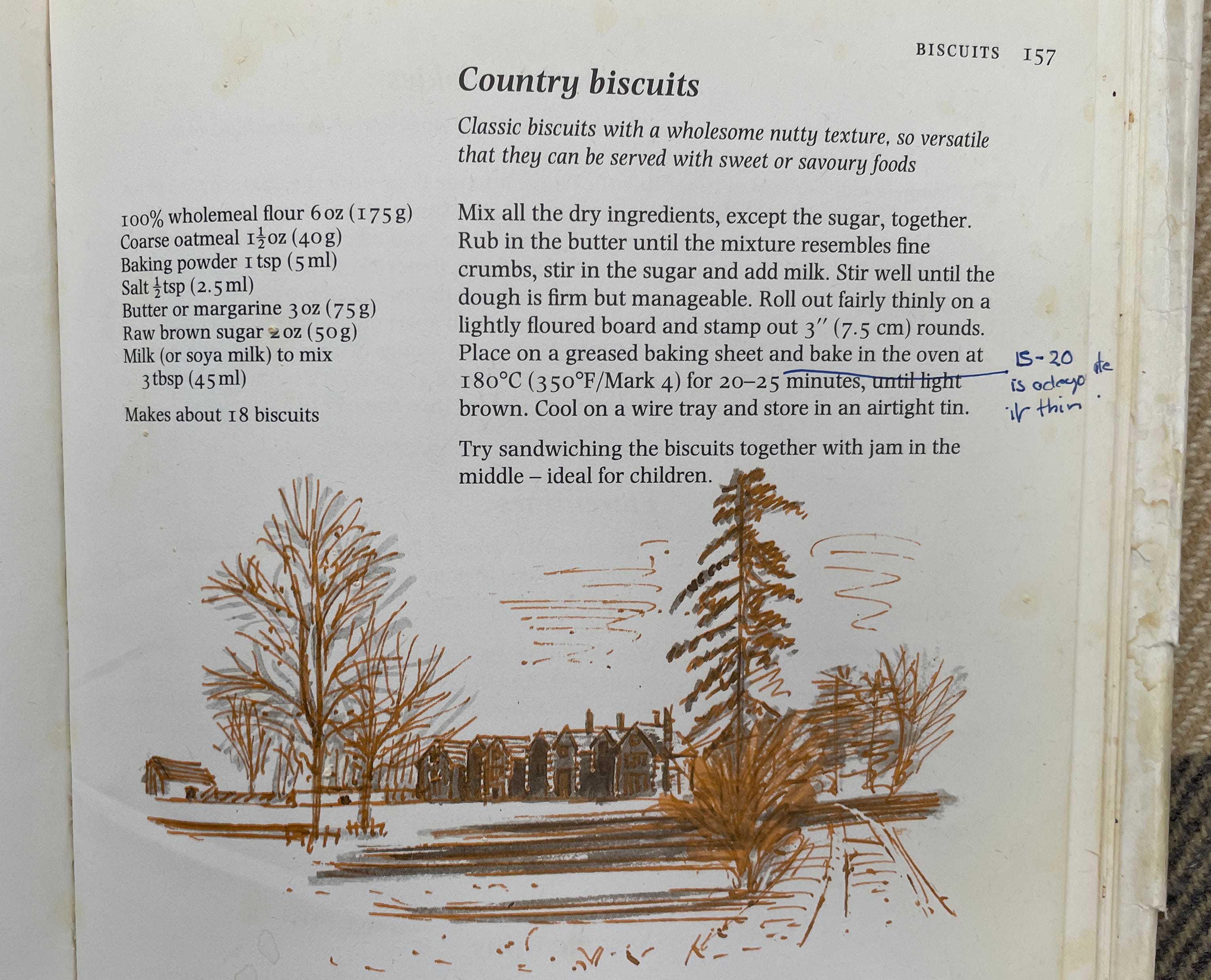
Wholemeal cereals are often forgotten in the fight against cholesterol. But they are an excellent way of reducing fat and sugar absorption. By baking with wholemeal flour you will find your entire digestive system improves. Your cakes and biscuits will taste and look far more delicious; nuttier in flavour and golden brown in appearance.
Wholemeal cereals - because of their satisfying bulk and high protein content - help us feel fuller for longer. By contrast, high fat and or high sugar refined flour pastries are likely to give us a short blood sugar spike followed by a low blood sugar level, which the body will recognise as hunger and tiredness. Even if you buy products from respectable high-street bakeries, the products are likely to be laden with chemicals that extend shelf life, enhance colour, and disguise the poor flavour of cheap fats. Home made is best made.
So if, like me, you’ve just crossed the statin threshold, it’s not a time to put the feet up, but instead, set out to your favourite flour emporium and purchase some stoneground, wholemeal flour - the best you can find - and get baking!
Cooking with wholemeal flour
If you want to change over to cooking with wholemeal flour, I recommend you find a stoneground flour with a high protein content (about 13-15%), which really helps make a good loaf and encourages fluffy sponges. Choose a flour, that has been finely ground. Raw chunks of bran do not fine baking make. If in doubt you can sieve out some bran and grind it up in a coffee mill before repalcing in the flour mix. However it is much easier to find a fine-milled flour in the first place. And if you are going to the bother of baking at home, I would also recommend an organic and sustainable mill. For really high proteins you will have to purchase a flour that is grown in southern Europe or Canada - we just don’t have the climate here in Britain. For biscuits and pastry the protein content is not so critical, so if you have stocks of lower protein flour then the biscuit recipe will work well.
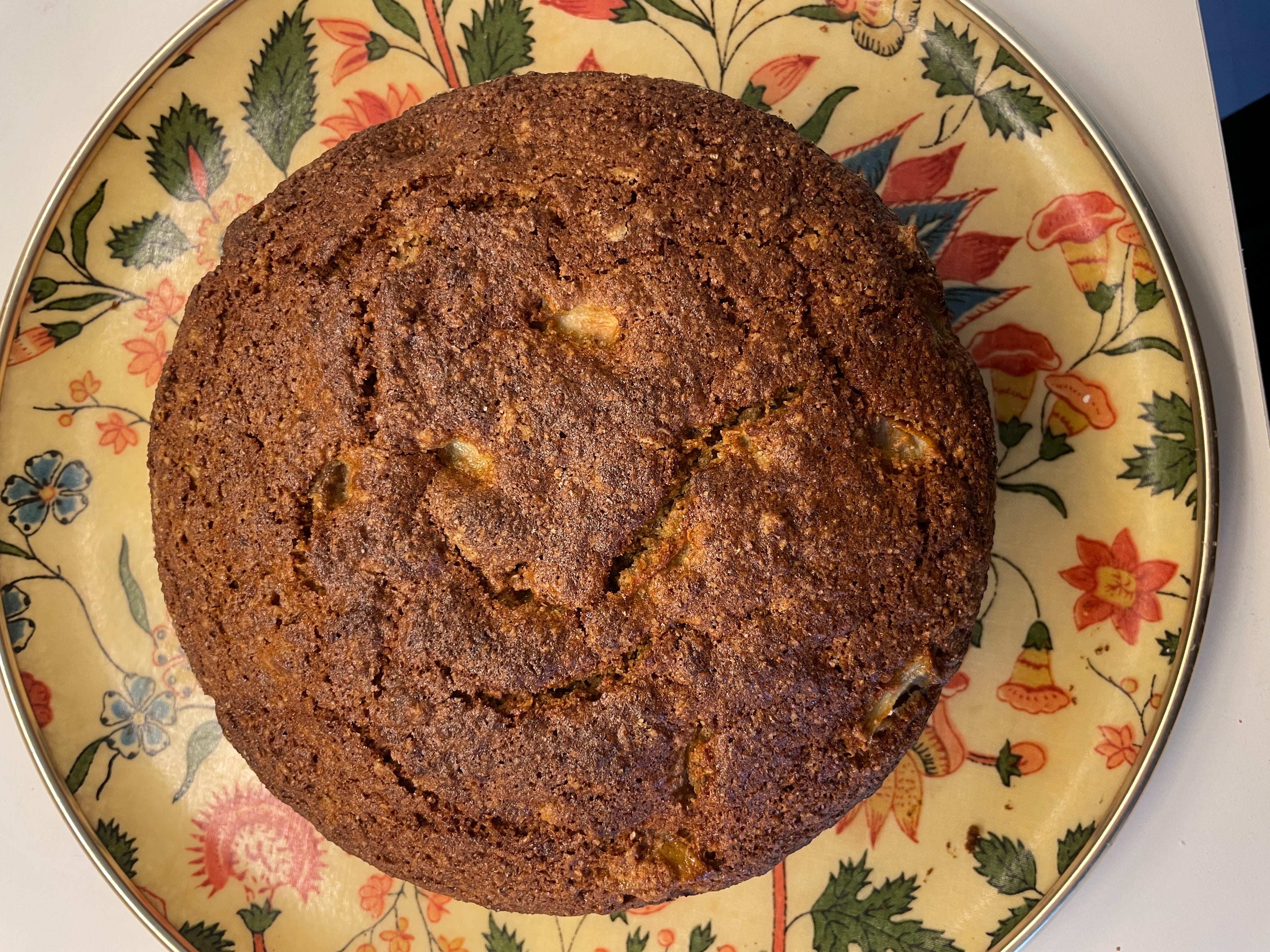
When converting a recipe from refined to wholemeal flour, you may need to add a little more water or milk than the original recipe dictates. You may also need to cook the cake or bread for a bit longer, to ensure it is cooked in the middle. Use a temperature plunger to check the internal temperature of bread and cakes, or the tried and tested steel knitting needle. If the needle comes out clean, the crumb is cooked.
Leave to cool down before cutting. This is especially important for wholemeal bread, which should be left for at least an hour, however tempting the aroma fresh out of the oven.
Internal temperatures
Cakes: Rich dough: 95-98°C
Bread: Lean dough: 88-93°C Rich dough: 77°C
Flour suppliers
Look for local stoneground mills. Check the internet for a local mill. There are some lovely historic mills up and down the country, and every year a few more are brought back into use. I particularly recommend Shipton Mill in Gloucestershire, which ticks all the organic and sustainability boxes as well as selling a high protein, very fine ground wholemeal wheat flour which is excellent for bread and cakes. You can buy at a very reasonable price direct from the mill, (in small or large quantities) or order it by post when it will be more costly.

WENDY SHILLAM
Clinical Nutritionist Health Writer
MA MSc ANutr Fellow RSPH

Book Glorious Summer
B&B bb-london.co.uk
ZERO INBOX POLICY
In order that my email recipients and I can maintain a manageable inbox I try to deal with all emails on the day I receive them. Don’t be alarmed by a very short reply - it should always be timely! If you don’t receive an immediate response do text me on either of my mobile numbers.
To me they are the ‘real thing’ and transform an optional treat into healthy ) food.
Thank you for this post Wendy, I am certainly an advocate for home baking rather than shop bought! I also love to experiment with different flours - wholemeal spelt, buckwheat and rye. You are right that they are very thirsty and need more liquid! But they do bring very interesting flavour profiles.