

Black Friday
Cooking with blé noir - dark buckwheat
My last entertaining effort happened to be on 30th November, coinciding with Black Friday. Perhaps it was fitting to produce a main course using wholemeal buckwheat - what the French call blé noir.
We live in a tall thin house with lots of stairs. During the thirty odd years that we’ve been here, I’ve learned to save up my dinner parties until there are 25 people who I could invite together. Then I’d commit to one day of frantic preparation, lots of running up and down stairs, and then one lovely evening of conviviality. The menu was always super simple: a cold starter, loads of bread, a huge casserole of something, a mound of baked potatoes and big salads followed by a cheese plate and fresh fruit for desert. And I’ll let you into a secret, if you invite 25 people a few will almost certainly help with the fetching and carrying.
I have to say that the ‘one spectacular dish’ philosophy is quite a good formula for any entertaining. It could be a pasta in sauce, a risotto, a paella, a soufflé or a whole wild salmon cooked in a fish kettle. I can attest to the fact that a soufflé and its 70-year-old chef will maintain their respective puffs, even while being trotted up 26 chilly concrete steps from the kitchen to the big dining table.
A friend for lunch
But, once in a while I really like to entertain one or two special friends. This time I’d invited Liz for lunch. I didint realise it was to be Black Friday - in more senses than one…
Because Liz is one of my very best friends, I decided not to reach for my staple ingredients, but to try something new. I’m sure most cookery writers would counsel against experimenting on guests, but I’m rather gung-ho about that sort of thing. My theory is that when trying out a new recipe you’ve got to have a bigger tasting panel than one man and a dog! And, after all, Liz is a good friend.
The inspiration
I’d been to Crêperie le Goéland d’Aligre a few months ago in Paris and supped on such a delicious galette au blé noir that my Google review gushed that this tiny restaurant merited three Michelin stars.
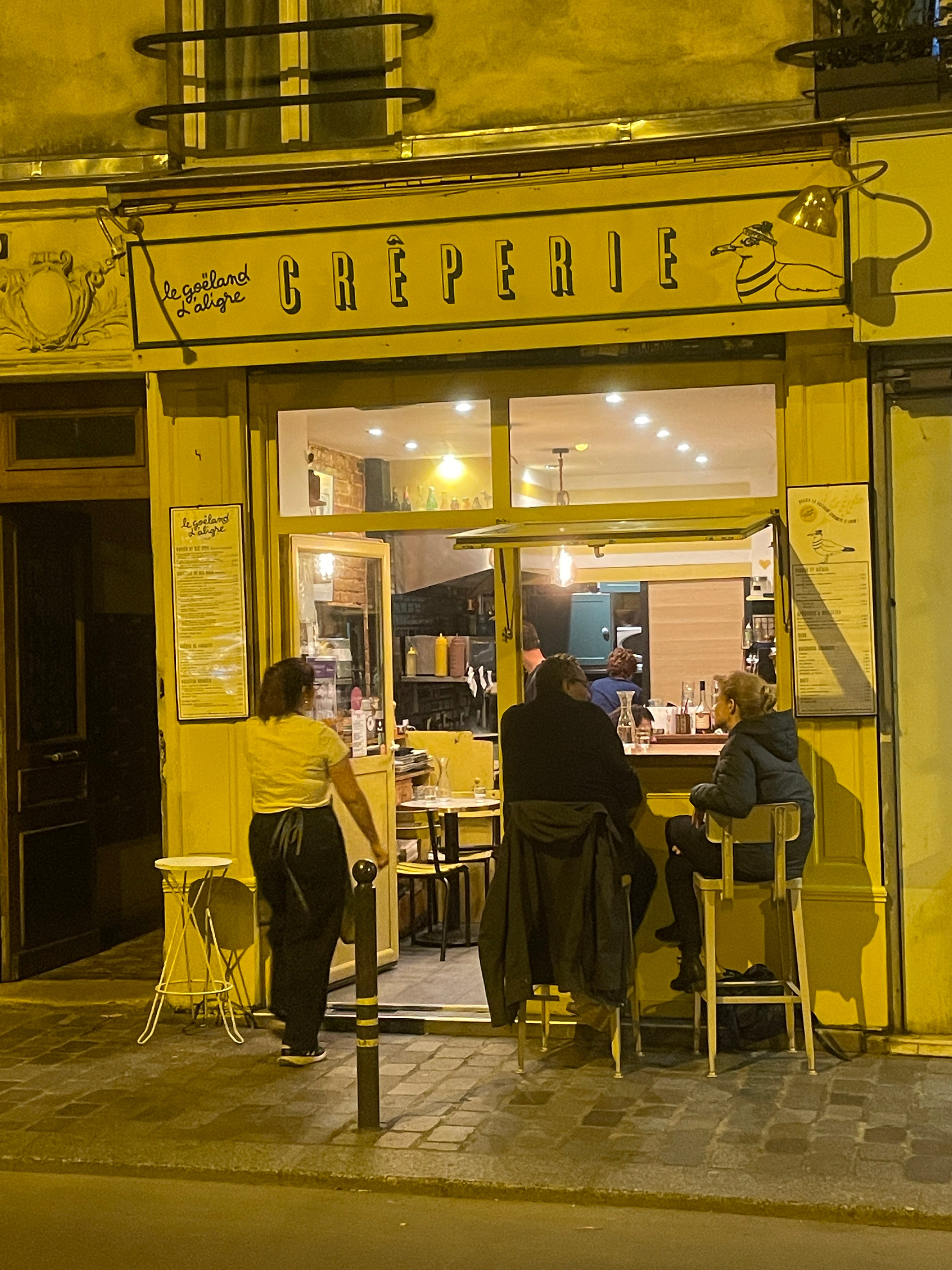
It is a tiny cafe inside, but has many more tables and chairs in the summer on the square.
Le Goéland serves a fusion of old fashioned Breton crêpes spiced up with Levantine flavours such as za’atar (a spice mix often used to flavour Lebanese flatbread), labneh (fresh cheese) and pomegranate.
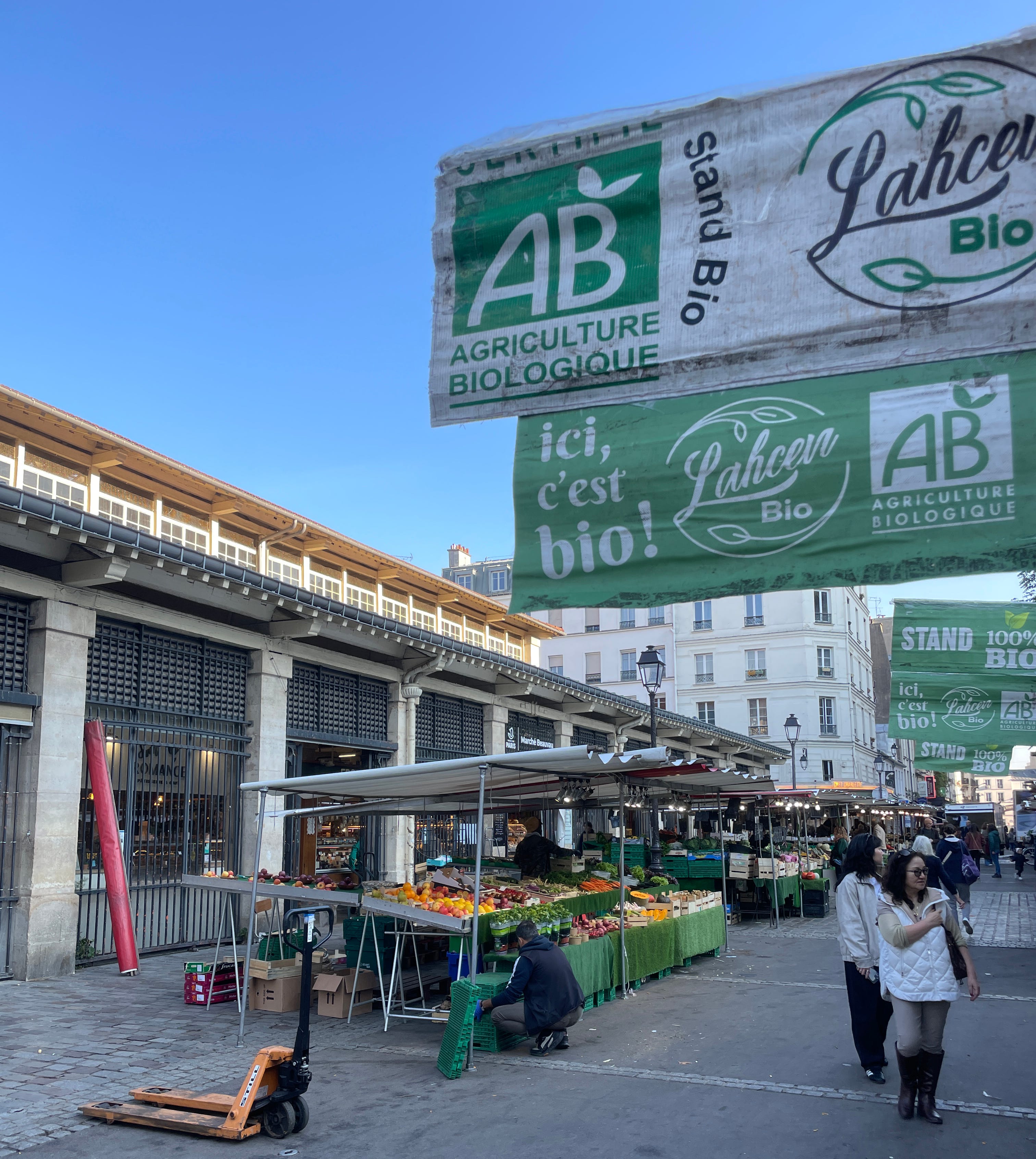
By day, the Place d’Aligre is home to an excellent food market with many organic stalls, each proudly displaying their ‘bio’ credentials. I’m sure the quality of fare in restaurants and shops all around the square is influenced by this proximity.*
I chose the dark buckwheat (blé noir) crêpes, which come out looking beautiful, like a huge chocolate dessert. The also serve many Breton staples, but I opted for the Lebanese inspired speciality - La Libanaise.
I sat inside - alone - and was immediately made to feel welcome by the staff who were close enough to chat easily while they worked. It was like eating in the kitchen of good friends.
The chef de poêle explained that this recipe is inspired by a classic filling for man’oushe- traditional Lebanese flatbread. A popular street food, it is a cross between pitta and pizza. Clasically the man’oushe is strewn with the herb mix za’atar and olive oil straight from the oven. Za’atar is a mix of Mediterranean herbs, sumac and sesame. The classic filling is crunchy salad, the local fresh cheese - labneh. The whole thing is flavoured with mint, a drizzle of pomegranate sauce and a generous sprinkling of sesame seeds.
The substitution of the pancake, using wholemeal or black buckwheat is a clever move. The blend of sweet and savoury was delicious on a warm autumn evening. The aromas were gorgeous.
I savoured all this deliciousness while knowing the blé noir was full of fibre and goodness, the fruit and veg was super fresh and the whole thing very nutritious.
Buckwheat is a pseudo cereal, not a grass like wheat, barley or oats, but is, in fact, a distant relative of rhubarb and knotweed. Its whole grain contains a good profile of protein (about 13%), healthy fats and slow release carbohydrates, as well as many of the B vitamins and minerals found in highly nutritious cereals such as wheat. Its lack of gluten makes it hopeless for making any leavened dish, which is why even buckwheat pancakes require a soupçon of wheat flour as well. I opted to use some of my leftover sourdough starter to strengthen the mix. Unlike cereals, it has a really pretty white flower before the seeds set, so you could grow it as a cover crop.
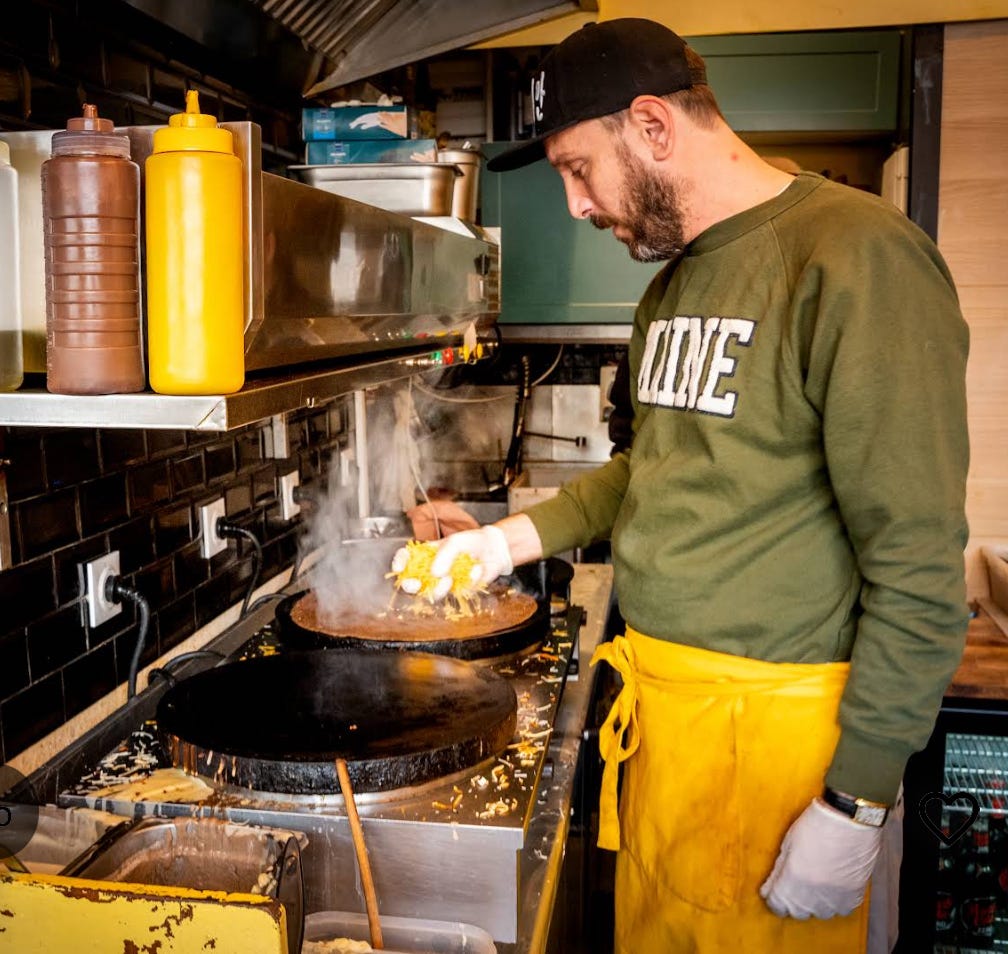
Photo: Tim Chin on Google
I sat so close to the hot plates that it was easy to strike up a conversation with the staff, who turned out to be Colombian. Conversing in a mixture of Spanish and French, they told me that the crêperie is run by a couple, one Breton and one Lebanese and their sumptuous galettes are made using a supplier of traditional Breton blé noir. This type of brown flour is known colloquially as Sarrasin - an ancient French term for an Arab. So it seems very fitting that this particular fusion should exist.
Since then, I’d been toying with the idea of trying these crêpes. And now I’ve tried them they are certainly going into my new book about wholegrains.
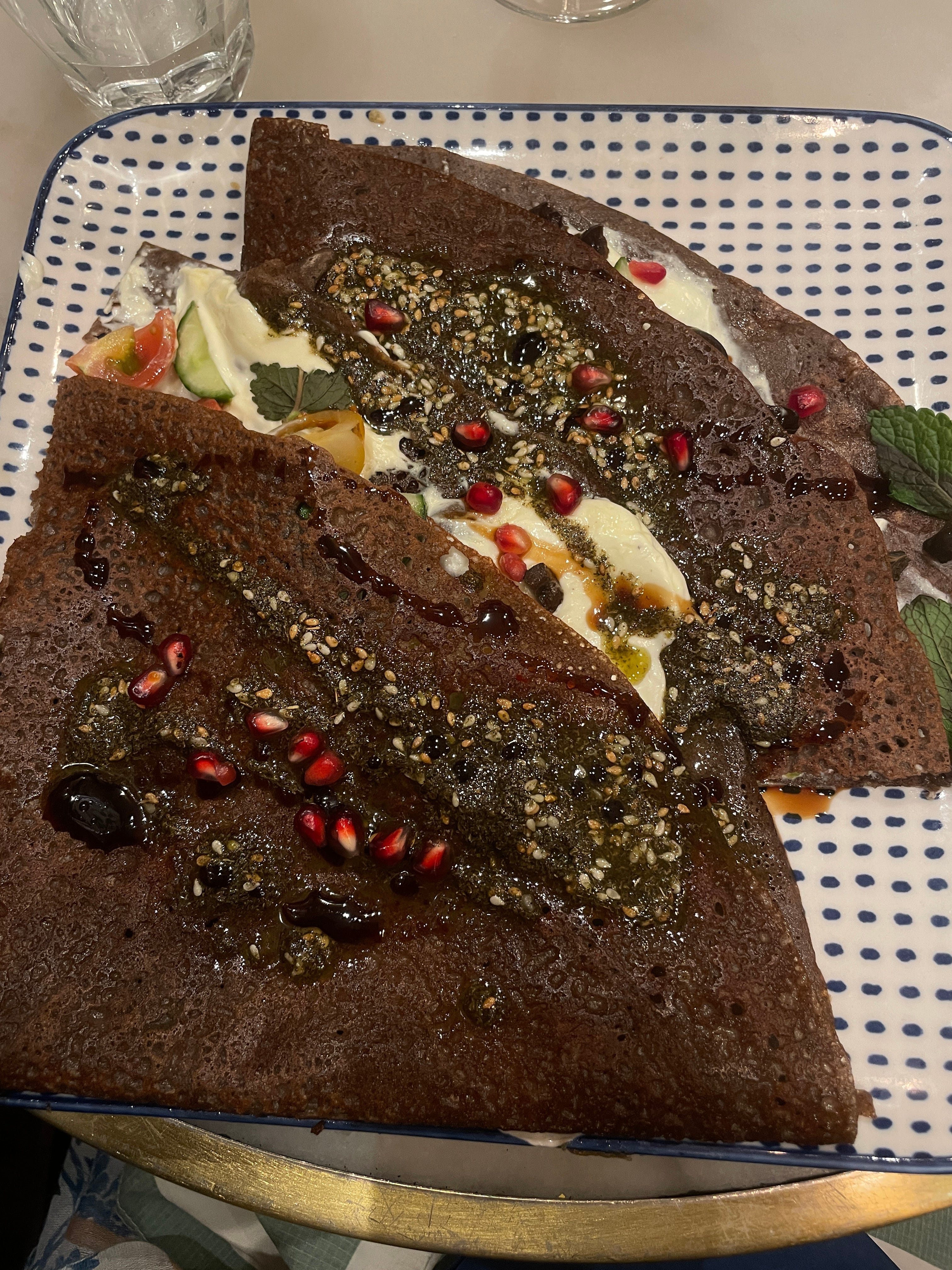
These are the galettes from Le Goéland, that I loved so much. I think the cheese has been mixed with olive oil to give it a more sauce-like consistency and a creamier colour.
First find the recipe
I’m pleased I’d invited Liz about a month ago, because it gave me plenty of time to research the batter recipe, which was far more nuanced than I’d anticipated.
In a crêperie, the batter will be made the night before and left to ferment for several hours. Then the galettes will be cooked on the hot plate to be thin, almost papery. At home our pancakes, especially those made with refined flour, tend to be smaller and thicker. My pancake frying pan is far from totally flat-bottomed!
Like all traditional foods, there’s a lot of myth and mystery surrounding Breton galettes. I searched French YouTube and found some charming old videos this one is definitely my favourite: The Breton gallette made on a wood fire with Maryvonne. (I think there’s a translation button somewhere on YouTube - otherwise just as entertaining watching and guessing what is said!)
But the old-fashioned ways has a number of drawbacks. For a start, my biggest frying pan is tiny compared to Maryvonne’s. I have no open fire and no huge farmhouse table to set everything upon. Notice the scrupulously laundered linen cloth where she piles up the pancakes before filling them. The surroundings may look a bit grimy, but her cooking methods are as clean as Claridges.
Other, more modern, websites recommended the addition of an egg and a little wheat flour to help the structure. Some suggested milk, but if I was going to get that chocolate colour, I knew the white milk would ruin it. I asked a fellow Substacker Lickedspoon a.k.a. Debora Robertson. She suggested molasses or coco powder. I decided to push the boat out and use 100% coco powder and to offset the bitterness of the coco I tossed in a teaspoonful of dark Muscovado sugar. I didn’t want to lighten my batter with white flour, so instead I used some wholemeal sourdough levain, which is at lease off white. At the last minute I tossed in a pinch of sumac - though beware it is a strong and pungent flavouring.
TIP: Always taste a batter, dough or cake mix before cooking. It is an easy exercise to adjust seasoning and you get used to how it should taste at that point.
The old recipes recommended leaving the batter to ferment in the fridge for 24 hours. But I decided that with the addition of an egg and the sourdough that an hour or two would do. Many recipes omitted the standing time completely - but I’m a sucker for the old ways.
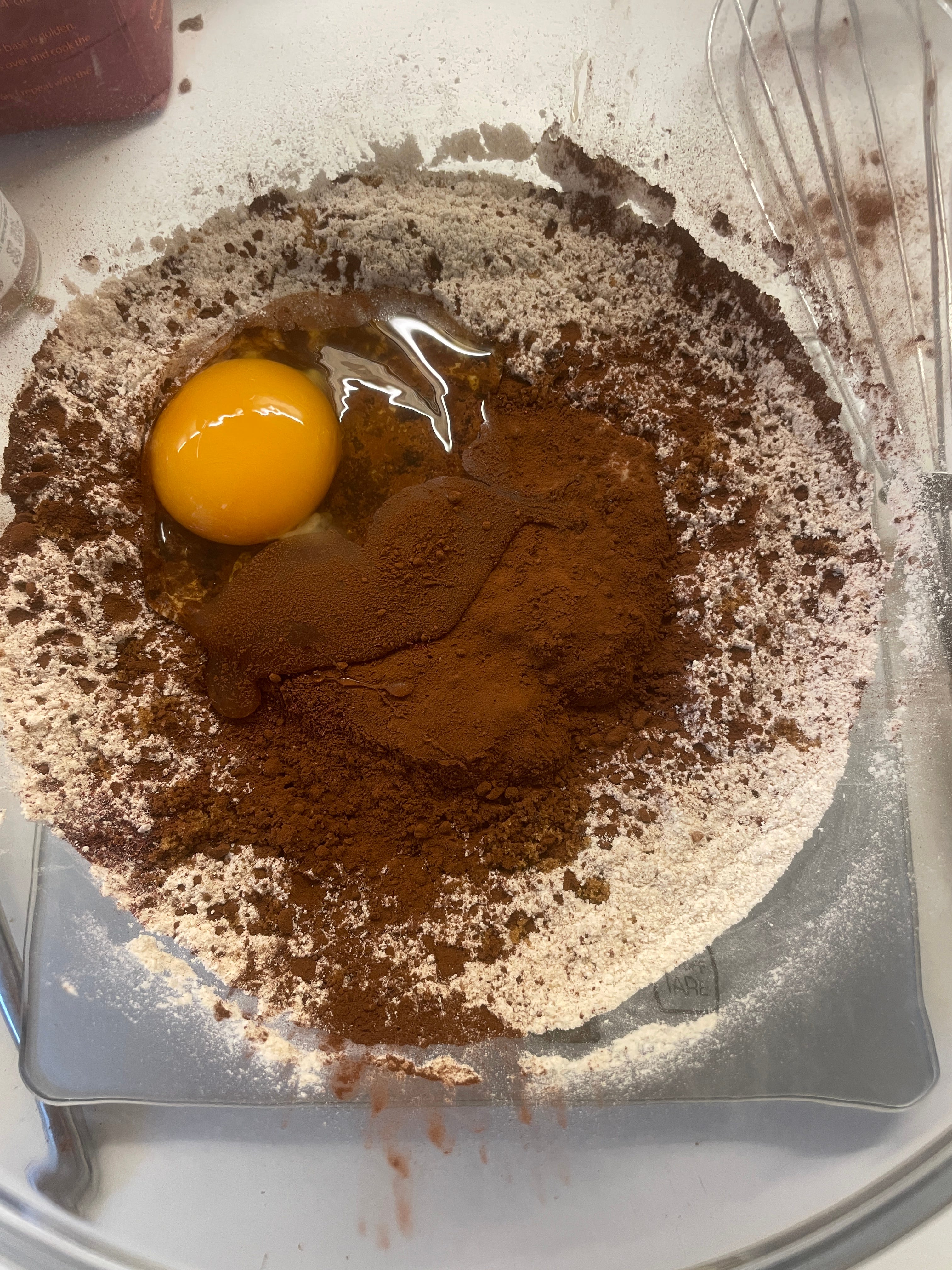
The final ingredients before being mixed - I used a whisk and not my hands as a true Breton housewife would! Some recipes call for just the yolk, but I’d hate to waste the high protein albumen.
Final countdown
Black Friday, the day allotted for my ‘black’ lunch dawned. The prep for the meal wasn’t onerous. Once I’d got the pancake mix in the fridge and poached pears in red wine for desert, I didn’t have much to do. I tossed a leaf salad, set the table and waited for Liz to turn up. I’d suggested she come at 12.00 for 1.00pm, assuming we could toast the season with a glass of Cava before eating. In fact, she turned up at ten minutes past one, complaining about Black Friday shoppers - the West End was chock-a-block that day. That might have spelled disaster if I’d decided to cook a soufflé; even a casserole might have become flaccid and overdone. But the ingredients for my galettes au blé noir - all cold - sat patiently on the worktop and the batter fermented away quite happily in the fridge. It only took a few minutes to cook and assemble six pancakes! All plated up in the kitchen and easy to serve.
The taste test
I was nervous to serve a hot dish with a cold filling. It felt like making a sort of inside out baked Alaska. But it looked sumptuous. I recalled my double take on being served this for the first time in Paris. Had they given me the desert galette by mistake? My galettes also looked more like a very large slice of chocolate cake!
I didn’t tell my guests that I’d darkened the flour with a tablespoon of coco powder. But coco doesn’t really taste of chocolate until you add a lot of sugar to it. The lovely dark brown colour of the crêpe, with its burnt look, but buttery taste, was beautifully offset by garnet red pomegranate seeds and a light dusting of sesame, looking like a light fall of snow. Alongside bright cherry tomatoes and the fresh green of the mint it adopted quite a Christmassy vibe.
As I was cooking, I realised that I could leave the butter to smoke and blacken a bit in the pan before ladling in the batter, adding to the darkness of the whole thing. I think you’ll agree my effort certainly looked as good as La Goêtland.
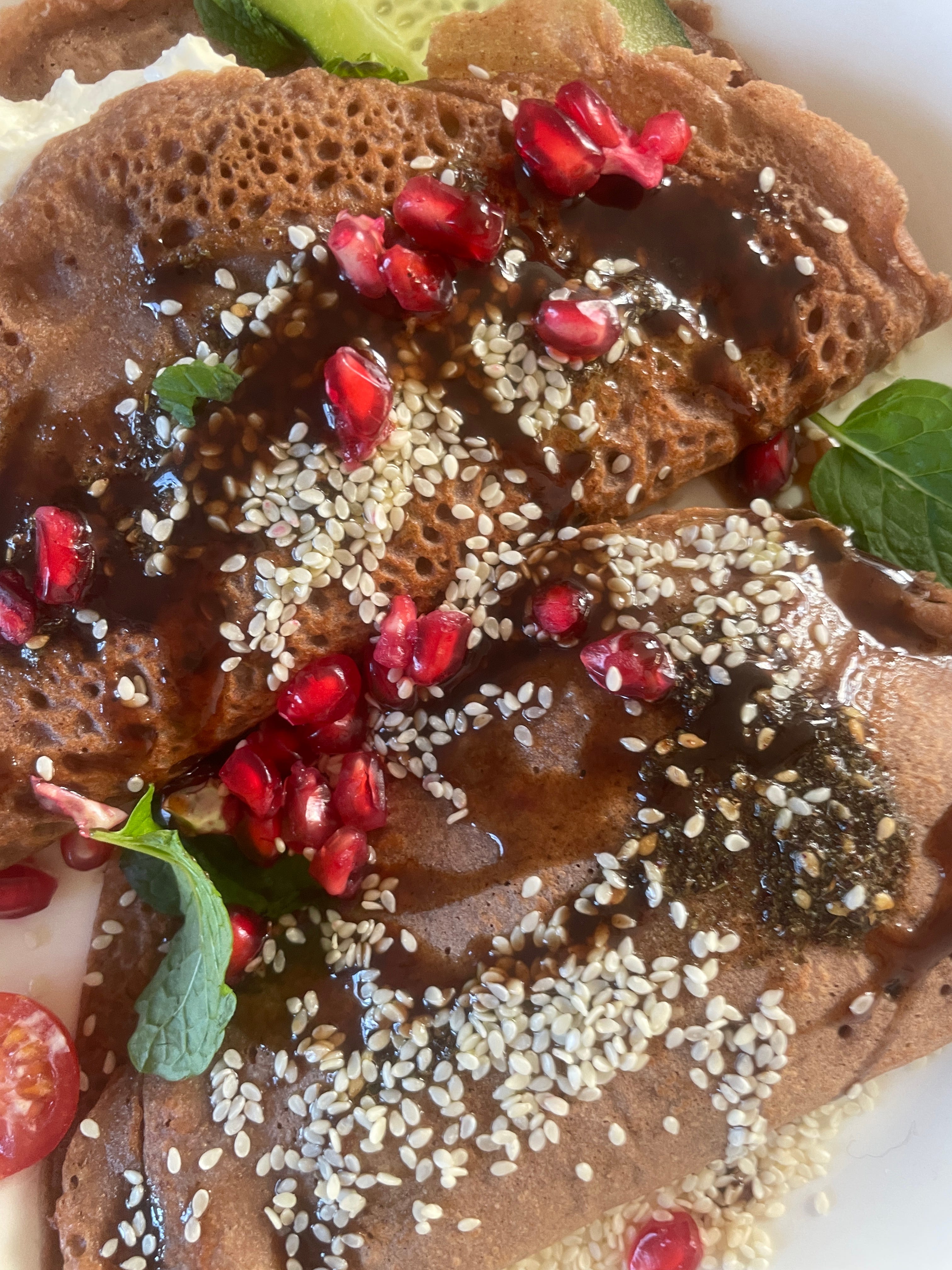
Look at all those bubbles! Courtesy of the yeasty sourdough starter and two hours fermentation time. I inadvertently filled one crepe the wrong way round. You’ll see they don’t look quite so pretty on the underside.
But what of the taste? I knew that my small tasting panel wouldn’t pull their punches. They all tucked in - and for a few seconds there was silence. But when they spoke they were complimentary. They liked the flavours, which Mike described as rich. Liz liked the fact that the filling was fresh. We all enjoyed a slightly lighter meal this recipe serves up, than the usual over-the-top and over calorific restaurant pancakes - overstuffed with cheap cheese or that ghastly cream that comes in a tin can spray.
The homemade labneh cheese was a revelation: light, flavourful and so easy to make! We all liked the mint and decided that next time there should be more of it.
To sum it up, our black pancakes on Black Friday were a hit.
RECIPE
Galette La Libanaise
Makes 8 medium galettes
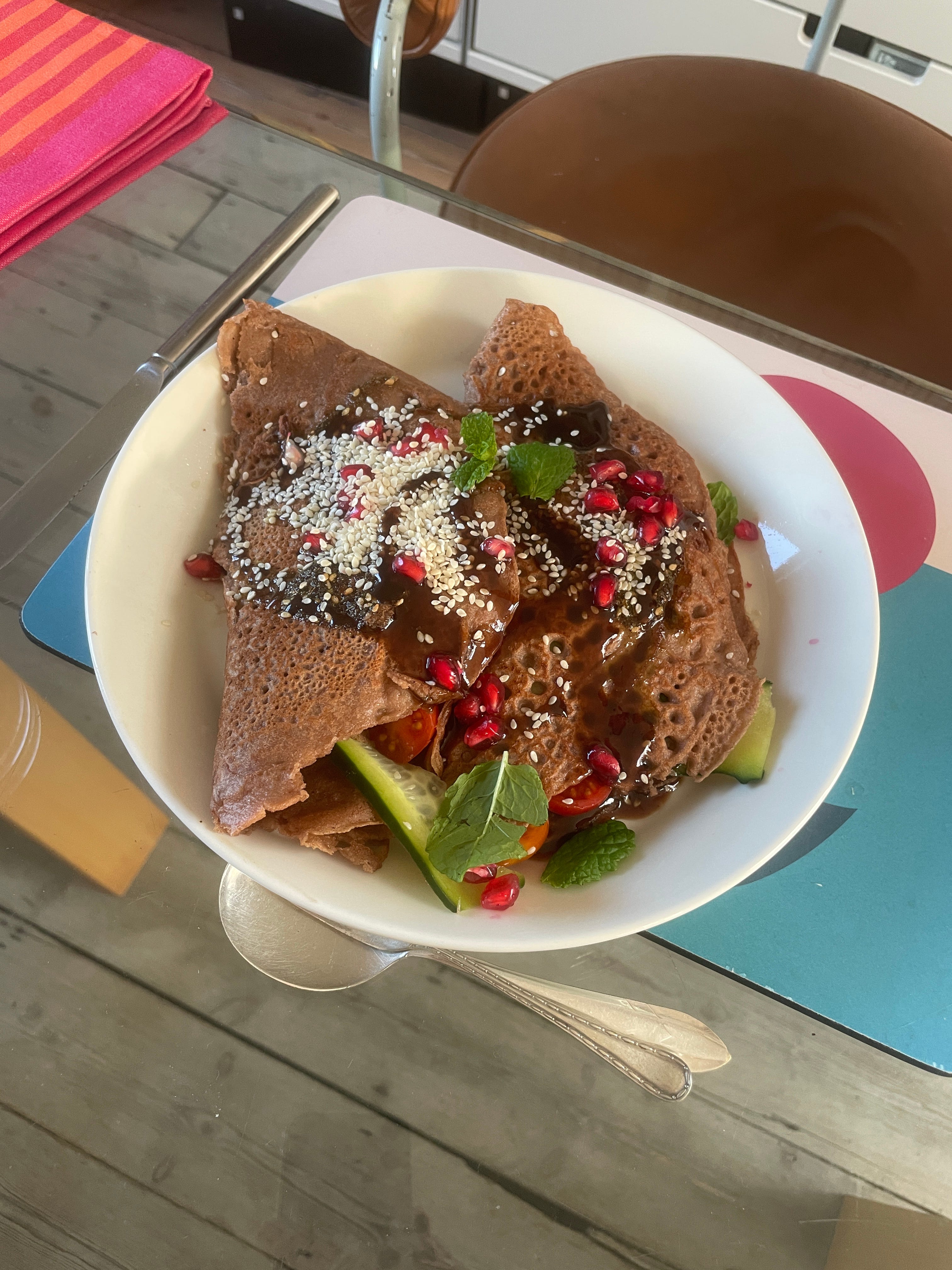
The galette, especially if you have a wide and flat crêpe pan and a krampouz** (the spreader) should be much thinner and more delicate than mine were. Either way, they’ll taste fine. Stack them up on a clean cloth or the serving plates in a warm place and then bring them back to the pan to reheat once you’re ready to fill them. But there’s no need to ‘cook’ the filling as you would with say ham and cheese.
Programme:
The night before - Prepare the labneh cheese. It will need to hang overnight in a cheese cloth.
Two hours betfore cooking - Mix the batter. Keep it in a cool place or the fridge. Give it an extra whisking before use.
As close to serving time - Prepare the fillings and garnishes to be set aside in a larder or on a cool bench.
Lebneh
Mix together a 450g pot of organic Greek yoghurt with 1/2 tsp fine salt.
Hang in a cheesecloth ‘sock’ over a bowl to strain for between 8-12 hours.
After making the galettes any left over can be refrigerated. But let it remain at room temperature for the filling.
Crêpes - prepare batter early the same day
Ingredients
Batter:
200g wholemeal dark buckwheat flour - I used Doves organic and stoneground
80g wholemeal wheat sourdough starter 1.1.1 (or substitute 40g wheat flour)
Water to mix - about 560 ml
1 egg
6g salt
5g dark Muscovy sugar - dark brown cane sugar, unrefined
10g 100% pure coco powder
Pinch of sumac
About 50g butter for frying
Filling:
300g home-made labneh, made with 450g pot of yoghurt (see above)
4 tbsp za’atar and 4 tbsp olive oil mixed together in a glass
24 mini tomatoes - halved
1 small cucumber, sliced lengthwise - salted and drizzled with wine vinegar to infuse while you make the pancakes
Small tub of pitted black olives, sliced into rings
Two spring onions cut into julienne strips
Topping:
I pomegranate - quartered and pith removed to release the seeds
Sesame seeds
Lebanese pomegranate sauce
Za’atar olive oil mix
This is what you do…
To make the batter:
Mix together all the dry ingredients using a hand whisk. Then add the egg, about 250ml water and the sourdough starter. Add more water to achieve a light batter, the consistency of single cream.
Once well mixed and aerated, cover the bowl and put in the fridge for a minimum of 1 hour. Whisk vigorously again before use.
In the meantime prepare each filling in a separate bowl so that they are easily used once the pancake cooking starts. Set aside at room temperature.
To cook the pancakes:
Heat the oven to 100C, put four heatproof dinner plates onto two racks in the oven. If you have a warm kitchen you could place them by the fire on a clean linen tea towel a la Bretonne.
Heat all the butter in a flat-bottomed frying pan, then once it is all melted pour most of the butter into a heatproof ramekin, then use this to re-glaze the pan before cooking each pancake. Allow the butter to heat up well, brown a little and smoke before putting one ladleful of batter onto the hot pan. Turn down the heat if you have halogen or gas. Twirl the mixture in the pan to even it out, use a krampouz** if you have one, or simply tip the pan a little if you don’t. Turn the pancake over over once its brown, bubbly and moves freely. Turn up the heat to cook on the other side. Remove and place flat on one of the plates in the oven to keep warm. Re-glaze pan and heat butter for the next pancake.
Once each plate has one cooked pancake, start a second pancake for the first plate. Bring the first plate out of the oven and while you are cooking the second pancake for that plate, fill the first pancake that you’ve kept hot in the oven.
The first side always looks best, so place the filling on the flatter second side, and fold it out of sight. No need to cook the filling. If you are filling using the pan, turn it right down to low.
Filling:
Take dessertspoonful of za’atar sauce and spread it out across the warm surface of the plated pancake with the back of the spoon. Then arrange the tomatoes, cucumber slices, olives, spring onions and a big blob of labneh on one half. Place a few mint leaves to stick out of the edges. Gently fold over the pancake to make a filled half circle.
By this time the second pancake will be ready in the pan. Fill it, as you did for the first one. Fold over to make a half-moon and flip it out from the frying pan to sit next to the first one. To decorate, drizzle with a little more of the za’atan olive oil mix, a few cheffy lines of pomegranate sauce and sprinkle with pale sesame seeds and pomegranate seeds (don’t overdo it). Return the finished plate to the oven while you make the rest of the pancakes and fill them all.
Serve: Immediately with a lightly seasoned green leaf salad and a glass of Breton cider, or perhaps a rich Lebanese, Beqaa Valley red wine.
* This little Parisienne neighbourhood is a great find for anyone taking a train to the Midi. Its only Only 10 minutes walk away is Gare de Lyon, and the gastronomic desert that surrounds it. It’s a revelation to move just a block or two further north, from the 12th to the 11th Arrondissement, and find yourself in such a pleasant neighbourhood. Place d’Aligre is right on the border. As well as the daily organic market, there are two good bakeries, a selection of restaurants from posh, to caff ,to trad brasseries and a rather fine chocolatière in the adjacent Rue d’Algre.
Hotels: I’d recommend the Ibis Bastille, Faubourg Saint Antoine 13 Rue Trousseau, 75011 Paris which is smart but not too expensive, has a courtyard garden, small bar, takes dogs and a great atmosphere. There’s a discount if you join their loyalty scheme. They were attentive and friendly to the wild-haired grand-mère who turned up with a small case and a huge bag of baking books and bread samples.
** A krampouz would make a great Christmas gift. They are traditionally wooden.
*** If you’re interested in the classic Lebanese flatbread there’s a recipe here.
https://plantbasedfolk.com/zaatar-manakeesh/